
Acoustic Louver – Advanced Noise Control & Ventilation Solution by Echo Acoustic
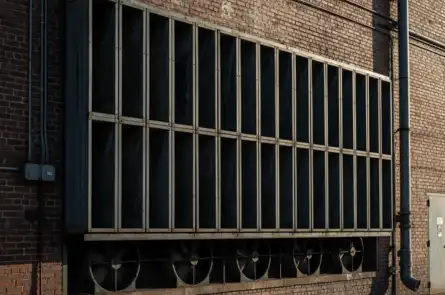
Managing noise while maintaining proper ventilation has become an essential requirement in today’s industrial, commercial, and residential environments. Whether it is a generator room, HVAC system, mechanical area, or industrial plant, excessive noise escaping through ventilation openings can cause disturbance, discomfort, and operational challenges. An Acoustic Louver is one of the most effective solutions to achieve both airflow and noise control without compromising the performance of equipment or the comfort of people nearby.
Our louvers are engineered using advanced sound-absorbing materials, durable construction, and optimized blade geometry, making them suitable for a wide range of applications across industries.
| Benefit | Description |
|---|---|
| Effective Noise Reduction | Minimizes sound escaping from mechanical rooms, DG sets, HVAC systems, and industrial areas. |
| Smooth Airflow | Provides ventilation without compromising airflow performance or equipment cooling efficiency. |
| Weather Protection | Shields ventilation openings from rain, dust, and debris while maintaining sound control. |
| Low Maintenance | Requires minimal upkeep due to durable construction and corrosion-resistant materials. |
| Energy Efficient | Enhances ventilation performance and reduces the load on HVAC and cooling systems. |
| Space Saving Design | Compact structure suitable for tight spaces and architectural integration. |
| Customizable | Available in multiple materials, sizes, blade depths, and noise rating options. |
| Type | Description |
|---|---|
| Standard Acoustic Louver | Ideal for general ventilation with moderate noise reduction requirements. |
| High-Performance Acoustic Louver | Designed for industrial setups requiring higher insertion loss and maximum noise control. |
| Weather-Proof Acoustic Louver | Includes rainproof design suitable for outdoor and exposed installations. |
| Aluminum Acoustic Louver | Lightweight, corrosion-resistant, suitable for commercial and architectural projects. |
| Steel / GI Acoustic Louver | Heavy-duty and durable, recommended for industrial plants and harsh environments. |
| Motorized Acoustic Louver | Comes with dampers for automated airflow control in HVAC and mechanical systems. |
| Application Area | Use Case |
|---|---|
| DG / Generator Rooms | Reduces generator noise while allowing required ventilation. |
| HVAC & AHU Systems | Controls sound from air handling units and large ventilation systems. |
| Mechanical Rooms | Minimizes sound leakage from pumps, compressors, and machinery. |
| Industrial Plants | Ensures ventilation while reducing equipment noise in factories and production units. |
| Commercial Buildings | Used in malls, offices, airports, and hospitals where quiet ventilation is required. |
| Power Plants & Utilities | Controls noise from turbine rooms, substations, and electrical installations. |
| Residential Buildings | Ideal for ducts, basement openings, utility areas, and exhaust systems. |
| Feature | Description |
|---|---|
| High Noise Attenuation | Designed with acoustic infill and blade geometry for superior sound absorption. |
| Optimized Free Area | Ensures excellent airflow without pressure drop or system load increase. |
| Durable Construction | Made using aluminum, GI, or stainless steel for long-term reliability. |
| Weather-Resistant Design | Protects against rain, dust, and outdoor conditions. |
| Custom Blade Profiles | Allows tuning of acoustic performance based on project requirements. |
| Corrosion-Resistant Coating | Powder-coated or galvanized finish for harsh environments. |
| Easy Installation | Available in multiple mounting options for wall, duct, and façade integration. |
| Specification | Details |
|---|---|
| Material Options | Aluminum / Galvanized Steel (GI) / Stainless Steel (SS 304/316) |
| Blade Thickness | 0.8 mm to 1.2 mm (material dependent) |
| Louver Depth | 150 mm / 300 mm / 450 mm (custom available) |
| Acoustic Infill Density | 48–96 kg/m³ mineral wool or acoustic-grade infill |
| Noise Reduction (Insertion Loss) | 8 dB to 25+ dB (model dependent) |
| Free Area | 30% to 55% depending on blade configuration |
| Finish / Coating | Powder-coated, galvanized, or anti-corrosion paint |
| Frame Construction | Welded sheet-metal frame with reinforced corners |
| Mounting Options | Wall mount, duct mount, flange mount, façade mount |
| Operating Temperature | -20°C to +120°C (based on material) |
| Applications | Ventilation openings, generator rooms, AHU rooms, industrial ducts, rooftop systems |
| Customization | Available in custom sizes, depths, blade angles, and acoustic performance levels |
What Is an Acoustic Louver?
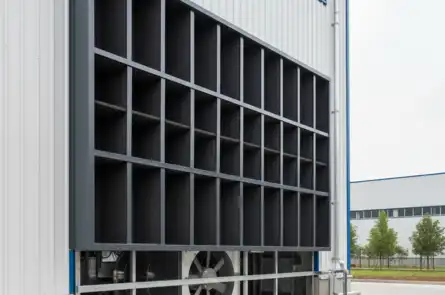
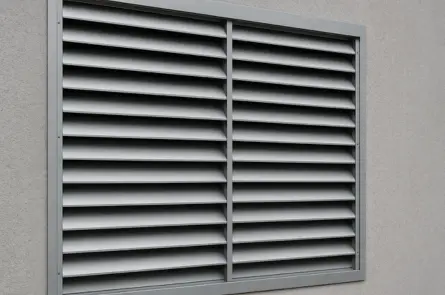
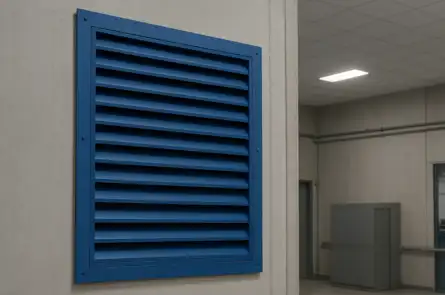
An Acoustic Louver is a specially designed ventilation unit equipped with sound-absorbing baffles that reduce noise transmission from mechanical or industrial equipment. Unlike standard louvers that focus only on air movement, acoustic louvers are built to block, absorb, and weaken sound waves as they pass through the system.
These louvers allow fresh air to enter or exit a space without letting noise escape, making them ideal for environments where ventilation and sound control must work together. Echo Acoustic manufactures acoustic louvers that provide optimal balance between noise reduction, airflow efficiency, and structural durability.
How Acoustic Louvers Work
Acoustic louvers operate on a combination of sound absorption, sound deflection, and airflow management. The internal baffles are filled with high-density acoustic material that absorbs sound energy. As noise travels through the angled blades, the sound path becomes longer and more complex, causing the sound waves to weaken. While this happens, the airflow remains uninterrupted due to the optimized free-area design.
This smart engineering ensures that noise levels are reduced significantly without affecting the performance of cooling, ventilation, or exhaust systems.
How to Choose the Right Acoustic Louver
Selecting the right acoustic louver depends on several factors. The first step is understanding the required noise reduction level based on the equipment’s noise output. Facilities must also consider the airflow requirement, measured in CFM or CMH, to ensure proper ventilation.
Environmental factors such as exposure to rain, dust, heat, or chemicals also influence material and coating choices. Space limitations, structural design, mounting options, and aesthetic preferences should also be considered.
Echo Acoustic provides expert guidance and technical support to help clients identify the most suitable acoustic louver that meets both performance and architectural needs.
Why Choose Echo Acoustic
Echo Acoustic is committed to delivering high-quality acoustic products backed by technical expertise and real-world performance. Our acoustic louvers are manufactured using durable materials, precision engineering, and industry-approved acoustic infill. We offer customization options that allow clients to tailor louvers to their unique project requirements.
Our team provides complete assistance—from understanding airflow and acoustic needs to selecting the correct louver model and ensuring proper installation. Echo Acoustic’s commitment to quality, reliability, and customer satisfaction makes us a trusted choice for both small and large-scale acoustic projects.
Maintenance of Acoustic Louvers
Acoustic louvers require minimal maintenance, making them a practical long-term solution. Regular cleaning to remove dust and debris ensures uninterrupted airflow. Louvers should be inspected periodically for corrosion, loose fittings, or blockages. In environments with high moisture or harsh conditions, occasional checks of the acoustic infill may be necessary.
With simple care, acoustic louvers can provide consistent noise reduction and ventilation performance for many years.
An Acoustic Louver is an essential component for any space that requires effective noise control without restricting ventilation. It plays a vital role in improving indoor comfort, maintaining safety standards, and supporting efficient equipment performance. Whether used in industrial plants, commercial buildings, or residential structures, acoustic louvers help create quieter and healthier environments.
With Echo Acoustic’s high-performance, durable, and customizable acoustic louver solutions, you can achieve the ideal balance of noise reduction and airflow for your project. Our commitment to quality engineering ensures that every louver delivers long-term value, reliable performance, and seamless integration into modern building designs.
Additional Services by Echo Acoustic
Echo Acoustic extends its expertise beyond core acoustic solutions by offering a range of advanced noise-control products tailored for modern environments. Our Phone Booths for Offices provide private, sound-isolated spaces ideal for calls, meetings, and focused work. The premium Noise Deadening Curtains effectively absorb sound, reduce echo, and enhance acoustic comfort in residential, commercial, and studio settings. We also design Movable Partitions that allow flexible space management while maintaining excellent sound insulation. For large-scale industrial and outdoor needs, our Concrete Noise Barriers deliver superior durability and high-performance noise reduction, ensuring quieter and safer surroundings.
Q1. What is the purpose of a louver?
A louver is designed to allow air to pass through an opening while protecting the space from rain, dust, debris, and direct visibility. In acoustic applications, louvers also help reduce noise escaping from mechanical rooms, HVAC systems, generator areas, and industrial equipment. They ensure proper ventilation without compromising comfort or safety.
Q2. Which type of louvers is best?
The best type of louver depends on your application.
- For industrial noise control: High-performance acoustic louvers with deeper blades provide maximum sound reduction.
- For commercial buildings: Aluminum acoustic louvers offer a lightweight, corrosion-resistant, and aesthetically modern option.
For outdoor areas: Weather-proof louvers with rain protection are the most effective.
Custom options can also be chosen based on airflow, size, and required noise attenuation.
Q3. What are the disadvantages of louvered doors?
While louvered doors offer ventilation, they come with a few limitations:
- They provide less sound privacy compared to solid doors.
- Dust and dirt can pass through the openings.
- They may require more frequent cleaning due to airflow.
- Not ideal for areas where complete acoustic isolation or high security is required.
However, acoustic louvers are engineered differently and are specifically designed to reduce noise while still allowing airflow.